
Best Swimming Technique: A Complete Guide
https://trainer.healthvigor.in/Swimming is one of the most effective forms of exercise because it works many parts of the body while placing relatively little stress on the joints. However, swimming efficiently is not simply about moving the arms and legs as quickly as possible. Good technique is about maintaining the correct body position, coordinating breathing with movement, reducing unnecessary resistance, and using each stroke efficiently.
There is no single swimming technique that is perfect for every person or situation. The best technique depends on the swimmer’s purpose. For beginners, comfort and proper body control are most important. For fitness swimmers, an efficient freestyle technique is often a practical choice. Competitive swimmers may use highly refined techniques designed specifically for speed and endurance. Regardless of the stroke, some fundamental principles can make swimming smoother, safer, and more effective..
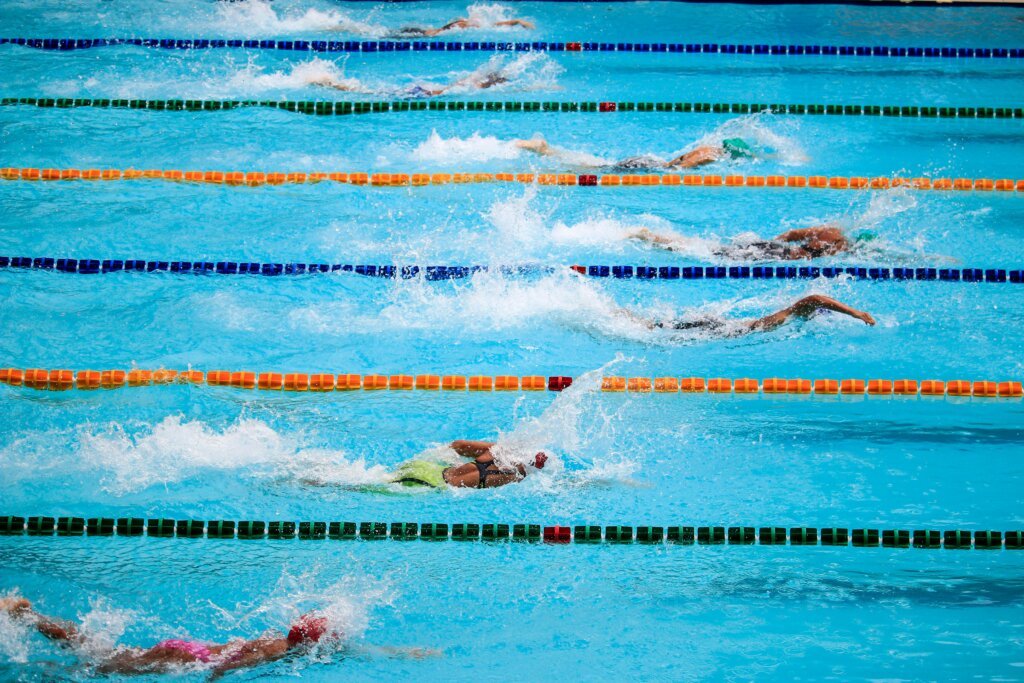
1. Maintain a Streamlined Body Position
One of the most important parts of good swimming technique is body position. The body should remain as horizontal as possible in the water. When the legs sink too low or the head is lifted unnecessarily, the body creates greater resistance, making swimming harder.
A swimmer should keep the head in a neutral position and look generally downward rather than constantly looking forward. The hips should remain close to the surface, while the body stays relaxed. A streamlined position allows the swimmer to move through the water with less resistance.
For beginners, learning to float comfortably is an important first step. Once a swimmer becomes comfortable with floating, maintaining a balanced position during swimming becomes much easier.
2. Develop an Efficient Freestyle Technique
Freestyle, commonly called front crawl, is often considered one of the most efficient swimming strokes for moving quickly through the water. It involves alternating arm movements, a steady flutter kick, and coordinated breathing.
During freestyle, one arm extends forward while the other completes its underwater movement. The arm should enter the water smoothly rather than crashing down onto the surface. After entering, the hand and forearm help catch and push against the water, while the arm moves backward toward the hip.
The legs perform a continuous flutter kick. The movement should come mainly from the hips, with the knees slightly bent and the feet relaxed. Kicking too aggressively can waste energy, especially during longer swims
3. Learn Proper Breathing
Breathing is one of the biggest challenges for new swimmers. Unlike many land-based exercises, swimming requires breathing to be coordinated with body movement.
In freestyle, swimmers normally turn their head to the side to breathe instead of lifting the entire head forward. Lifting the head can cause the hips and legs to drop, increasing resistance. BEST SWIMMING TECHNIQUE
A useful approach is to breathe out gradually while the face is in the water and inhale when the mouth reaches the air. Developing a regular breathing rhythm can help prevent fatigue and make swimming feel more natural.
Swimmers should not hold their breath for unnecessarily long periods. Comfortable, controlled breathing is generally more useful than trying to stay underwater for extended periods.
4. Coordinate the Arms and Legs
Good swimming depends on coordination. The arms, legs, body rotation, and breathing should work together rather than functioning as separate movements.
In freestyle, the body naturally rotates slightly from side to side as the arms move. This rotation can help the swimmer reach forward comfortably and make the stroke more efficient.
The kick should support the body position and rhythm rather than simply being used to generate maximum force. For longer-distance swimming, an efficient and controlled kick can help conserve energy.
Beginners should first concentrate on smooth movements. Speed can be developed later as technique improves
5. Reduce Resistance in the Water
Water creates much more resistance than air, so even small changes in body position can affect swimming efficiency. Good swimmers do not simply produce more power; they also learn to reduce resistance.
A streamlined body, relaxed movements, and proper head position can all help reduce drag. The swimmer should avoid unnecessary movements such as excessive bending of the knees, crossing the arms over the body’s center line, or lifting the head too high
6. Keep the Arm Stroke Controlled
Powerful swimming does not require aggressive arm movements. A controlled stroke is usually more efficient than hurried movements.
During freestyle, the hand should enter the water in front of the shoulder area rather than crossing too far across the body. The underwater pull should be strong but controlled. The arm should then recover over the water in a relaxed manner. BEST SWIMMING TECHNIQUE
Swimmers often make the mistake of trying to increase speed by moving their arms extremely fast. This can lead to poor technique and early fatigue. Improving the quality of each stroke is usually more beneficial.
7. Use a Relaxed Flutter Kick
The flutter kick plays an important role in freestyle, but it should not consume excessive energy. The legs should remain relatively close together, and the feet should stay relaxed.
The movement should be generated primarily from the hips rather than making large movements from the knees. A small, consistent kick can help maintain body position and rhythm.
For recreational or endurance swimming, swimmers often benefit from focusing on efficiency rather than trying to kick as hard as possible.
8. Practice Body Rotation
Proper body rotation can make freestyle swimming smoother. Instead of swimming with the shoulders completely flat, the swimmer can rotate the body gently from one side to the other.
This rotation helps coordinate the arms and can make breathing easier. It should be controlled rather than exaggerated. Excessive rotation may disturb balance, while too little rotation can make the stroke feel stiff.
Practising side kicking and one-arm drills can help swimmers understand body rotation and balance.
9. Choose the Right Technique for Your Goal
The best swimming technique depends on what the swimmer wants to achieve. BEST SWIMMING TECHNIQUE
For general fitness, freestyle is an excellent choice because it can provide a full-body workout and can be performed at different intensities.
For relaxation and gentle exercise, breaststroke may be comfortable for some swimmers because it has a slower rhythm and allows easier visual awareness of the surroundings.
For back-strengthening and variety, backstroke can be useful because the swimmer remains on the back while performing alternating arm movements and a flutter kick.
For competitive swimming, swimmers may train all four major competitive strokes: freestyle, backstroke, breaststroke, and butterfly.
There is therefore no universal answer to which stroke is “best.” The appropriate technique depends on the swimmer’s ability, purpose, and comfort in the water.
10. Use Swimming Drills
Swimming drills are exercises designed to improve specific parts of a stroke. They can be very useful because they allow swimmers to focus on one technical element at a time.
Examples include kick drills, one-arm freestyle drills, catch-up drills, side-balance drills, and breathing drills. These exercises can help improve body position, coordination, breathing, and stroke mechanics.
However, drills should be performed with proper supervision, particularly by beginners. A qualified swimming instructor can identify technical problems and recommend suitable exercises.
11. Focus on Consistency Rather Than Speed
A common mistake is trying to swim as fast as possible during every session. Speed is important for competitive swimmers, but technique should come first.
A swimmer who maintains good form at a moderate pace can gradually develop endurance and speed. Swimming too fast with poor technique may encourage inefficient movements and unnecessary fatigue. BEST SWIMMING TECHNIQUE
A good training session can include a gentle warm-up, technique practice, steady swimming, and a relaxed cool-down. The exact structure should depend on the swimmer’s experience and goals.
12. Safety Is Part of Good Swimming Technique
Swimming technique should always be combined with water safety. People who are learning to swim should practise in a supervised environment and should not enter unfamiliar or unsafe water.
Beginners should learn basic water confidence, floating, breathing control, and safe entry and exit techniques. Children and inexperienced swimmers should have appropriate adult supervision.
Swimming ability can vary greatly between people, and being comfortable in a pool does not automatically mean someone is safe in every aquatic environment.
13. Common Technique Mistakes
Several common mistakes can make swimming unnecessarily difficult.
One mistake is lifting the head too high. This can cause the lower body to sink. Another is kicking from the knees with large movements, which can waste energy. Crossing the arms over the body’s center line can also affect balance and direction.
Some swimmers hold their breath and then try to exhale suddenly. Developing a steady breathing pattern is generally more comfortable. Others try to use maximum effort throughout the entire session instead of learning to swim efficiently.
Recognizing these mistakes is an important part of improving swimming technique.
14. Improve Technique Through Regular Practice
Swimming technique develops through repetition. A swimmer should practise movements regularly rather than expecting major improvement after only a few sessions.
Video analysis can sometimes help experienced swimmers identify technical issues, while direct feedback from a qualified instructor can be especially valuable for beginners.
It is also useful to focus on one or two technical goals at a time. For example, one session might focus on body position and breathing, while another concentrates on the arm stroke and rotation.
Conclusion
The best swimming technique is not simply the one that produces the greatest speed. It is the technique that allows a swimmer to move efficiently, comfortably, and safely through the water.
For many swimmers, freestyle provides an excellent foundation because it combines effective body positioning, coordinated arm movement, flutter kicking, and rhythmic breathing. However, other strokes can also be valuable depending on individual goals.
The key principles are to maintain a streamlined body position, reduce unnecessary resistance, coordinate the arms and legs, breathe comfortably, and avoid wasting energy. With regular practice and appropriate instruction, swimmers can gradually improve their technique, endurance, confidence, and overall performance.
Ultimately, excellent swimming comes from efficiency rather than force. Learning to work with the water instead of fighting against it is what makes swimming smoother, more enjoyable, and more effective. BEST SWIMMING TECHNIQUE