
How to Sell Digital Products Online: A Complete Beginner’s Guide
The internet has created countless opportunities for creators, freelancers, educators, designers, and entrepreneurs to build income streams without maintaining physical inventory. One of the most accessible options is creating and selling digital products. From ebooks and templates to online courses and printable resources, digital products can be delivered instantly and sold to customers around the world.
If you are wondering how to sell digital products online, the process is easier than it may initially seem. You need a useful product, a clearly defined audience, a suitable selling platform, and a practical marketing strategy. This guide explains each step so beginners can confidently turn their skills and ideas into digital products that people are willing to buy.
What Are Digital Products?
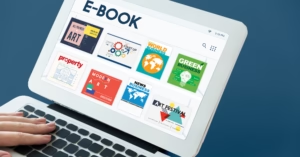 Digital products are goods that customers purchase and receive electronically rather than as physical items. Because there is no physical inventory, sellers can create a product once and potentially sell it repeatedly.
Popular examples include:
- Ebooks and digital guides
- Printable planners and worksheets
- Canva templates
- Online courses
- Digital artwork and illustrations
- Stock photographs
- Resume templates
- Spreadsheets and financial trackers
- Notion templates
- Fonts and design resources
- Digital invitations
- Checklists and educational resources
The best product is not necessarily the most complicated one. A simple resource that solves a specific problem can be more valuable than a large product with little practical use.
Why Should You Sell Digital Products Online?
There are several reasons digital products have become attractive to new entrepreneurs. Unlike physical businesses, you generally do not need to purchase inventory, rent storage space, or arrange traditional shipping.
Once the product has been created, delivery can often be automated. A customer can make a purchase and receive access to the files almost immediately.
Other advantages include:
- Low initial investment
- No physical inventory
- Worldwide customer reach
- Automated delivery
- Flexible working hours
- Opportunity to create multiple products
- Easy product updates
- Potential for repeat sales
However, digital products are not a guaranteed source of income. Success depends on choosing the right niche, creating something genuinely useful, presenting it professionally, and consistently reaching potential customers.
How to Sell Digital Products Online in 8 Simple Steps
1. Choose a Profitable Digital Product Idea
The first step is finding an idea that combines your skills with an actual customer need. Think about problems people regularly face and consider whether you can create a downloadable solution.
For example, someone interested in fitness could create a workout planner, while a designer could sell social media templates. A teacher might create worksheets or study resources.
Before creating anything, research similar products and identify what customers like, dislike, or frequently request. This can help you find opportunities instead of creating something based purely on assumptions.
2. Research Your Target Audience
Understanding your potential buyers is essential. Ask yourself who would benefit most from the product, what problem they want to solve, and what type of solution they are already searching for.
You can study online communities, search results, customer reviews, social media discussions, and competing products to understand common concerns.
A clearly defined audience also makes marketing easier. Instead of promoting a generic planner to everyone, for example, you could create a planner specifically for students, freelancers, small business owners, or busy professionals.
3. Create a High-Quality Digital Product
The next stage in how to sell digital products online is product development. Choose software that fits the product format. Documents can be created in word-processing applications, spreadsheets in spreadsheet software, and visual templates in design platforms.
Organize the material into logical sections and check spelling, formatting, file compatibility, instructions, and accessibility. If the product contains calculations, links, or editable elements, test them before publishing.
4. Decide Your Pricing Strategy
Pricing can be challenging when you are starting out. Avoid choosing a price simply because another seller uses it.
Consider the amount of work involved, the usefulness of the product, the target audience, competing products, and the value the customer receives.
You can experiment with introductory prices, product bundles, premium versions, or different packages. For instance, instead of selling one template separately, you could offer a collection of related templates at a slightly higher price.
The goal is to create a price that feels reasonable to your target audience while still reflecting the value of your work.
5. Choose Where to Sell
Choosing where to sell is an important part of how to sell digital products online. You can use a dedicated digital-product marketplace, an ecommerce website, or a personal website with payment and delivery integrations.
When comparing platforms, review transaction fees, subscription costs, payment methods, file-size limits, automatic delivery, customer management, analytics, refund handling, and regional availability.
6. Create a Strong Product Listing
Your product page needs to convince visitors that your digital product is worth purchasing.
Start with a clear title that tells customers exactly what they are getting. Follow it with a description focused on benefits rather than simply listing features.
Include:
- What the product contains
- Who it is designed for
- How it can be used
- File formats included
- Number of pages or resources
- Important requirements
- Preview images
- Frequently asked questions
High-quality previews can be particularly useful because customers cannot physically examine a digital product before buying it.
7. Promote Your Digital Products
Creating a great product is only half the process. Customers need to discover it.
There are several ways to promote digital products. Search engine optimization can help your content appear when people search for relevant solutions. Social media platforms can be used to demonstrate how your product works or share useful information related to it.
Other strategies include:
- Email marketing
- Pinterest marketing
- YouTube content
- Instagram Reels
- Blog content
- Short-form videos
- Affiliate partnerships
- Paid advertising
Avoid making every piece of content a direct sales pitch. Educational and helpful content can build trust while naturally introducing your product to the right audience.
8. Track Results and Improve
Once your product is available, pay attention to its performance. Look at views, clicks, conversions, sales, customer questions, reviews, and refund requests where available.
If many people view a product but very few purchase it, your pricing, presentation, description, or product-market fit may need improvement.
Customer feedback can also reveal opportunities for new products. Instead of constantly guessing what people want, use real responses to guide future decisions.
Best Platforms to Sell Digital Products Online
There is no single platform that is ideal for every seller. Your choice should depend on the type of product and the level of control you want.
Personal website: Best for building a long-term brand and having greater control over your store.
Digital storefront: Suitable for beginners who want a relatively straightforward way to list and deliver downloadable products.
Online marketplace: Useful for sellers who want to reach people already searching for digital products.
Ecommerce platform: A stronger option for creators planning to build a larger online store with multiple products.
Course platform: Particularly suitable for educational products, video lessons, memberships, and structured learning programs.
Before selecting a platform, review its current pricing, payment options, transaction fees, file limitations, and seller policies.
How to Market Digital Products and Get Your First Customers
Marketing becomes much easier when you focus on the problem your product solves. Instead of repeatedly telling people to buy something, demonstrate its usefulness.
For example, if you sell a budgeting spreadsheet, create content explaining common budgeting mistakes and show how your resource can simplify the process.
SEO can help you attract people actively searching for solutions. Social media can help you demonstrate your expertise and connect with potential buyers. Email marketing can be useful for building a direct relationship with interested customers.
You can also offer a free sample, checklist, mini-template, or useful resource to encourage people to discover your brand before making a purchase.
Common Mistakes to Avoid When Selling Digital Products
Beginners often make avoidable mistakes when starting a digital product business.
One common mistake is creating products without researching whether people actually need them. Another is trying to copy successful competitors instead of developing an original approach.
Other problems include poor-quality previews, unclear product descriptions, random pricing, inconsistent promotion, and ignoring customer feedback.
You should also pay attention to copyright, trademarks, licensing, and platform rules. Only sell content and assets that you have the right to distribute.
Starting small can help you test your idea before investing significant time or money.
Tips to Increase Digital Product Sales
If you want to improve your results, focus on creating a better customer experience rather than simply producing more products.
Start with one focused product and make it genuinely useful. Use clear previews, straightforward descriptions, and practical instructions. Consider creating bundles once you have several related products.
Customer reviews can also strengthen trust, while regular updates can keep existing products useful.
Most importantly, continue learning from your audience. Your first product does not have to be perfect. The information you collect from customers and sales data can help you create stronger products in the future.
Frequently Asked Questions
Is it profitable to sell digital products online?
Yes, digital products can be profitable because they generally do not require physical inventory or shipping. However, profitability depends on demand, pricing, product quality, marketing, platform costs, and competition.
What is the easiest digital product to sell?
Beginner-friendly options include templates, printable planners, checklists, simple guides, worksheets, and trackers. The easiest product to create is not necessarily the easiest to sell, so demand should be considered first.
Do I need a website to sell digital products?
No. A website can be useful for building your own brand, but beginners can also use digital storefronts and marketplaces. Your choice depends on your budget, technical ability, and business goals.
How much does it cost to start selling digital products?
The starting cost can be relatively low. You may be able to create your first product using free or inexpensive tools. However, you may eventually spend money on premium software, platform fees, website hosting, advertising, or professional services.
How can I sell digital products without an audience?
You can use SEO, marketplaces, social media, content marketing, partnerships, and paid advertising to reach potential customers. Creating useful content around your niche can gradually help you attract an audience.
Final Thoughts
Learning how to sell digital products online does not require a huge investment or an extensive product catalogue. A better approach is to begin with one useful product that addresses a specific need.
Research your audience, create an original and valuable resource, choose an appropriate selling platform, and promote it consistently. Then use customer feedback and performance data to improve.
The digital marketplace can be competitive, but a focused product, clear positioning, strong presentation, and consistent marketing can give beginners a practical foundation for building a sustainable online business.